


Assessment of Petroleum Pollution
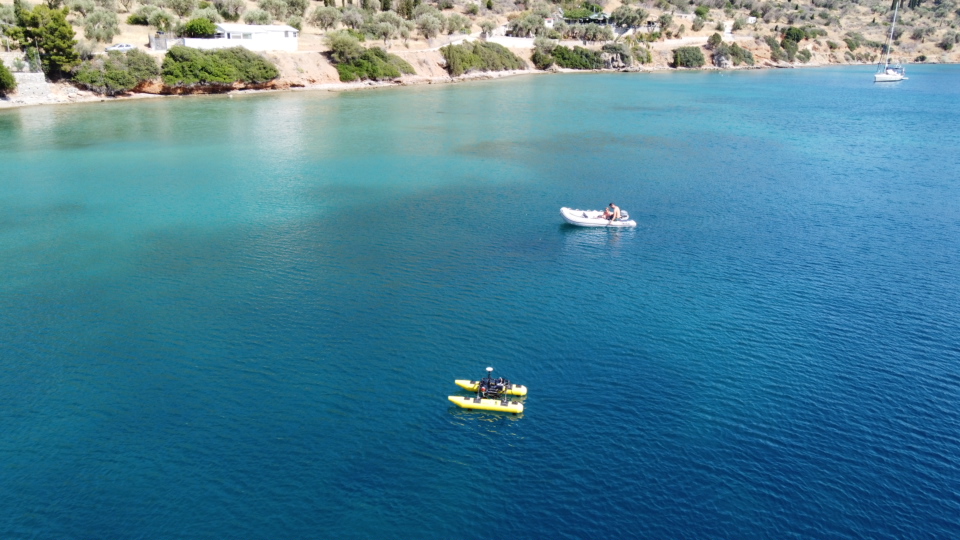
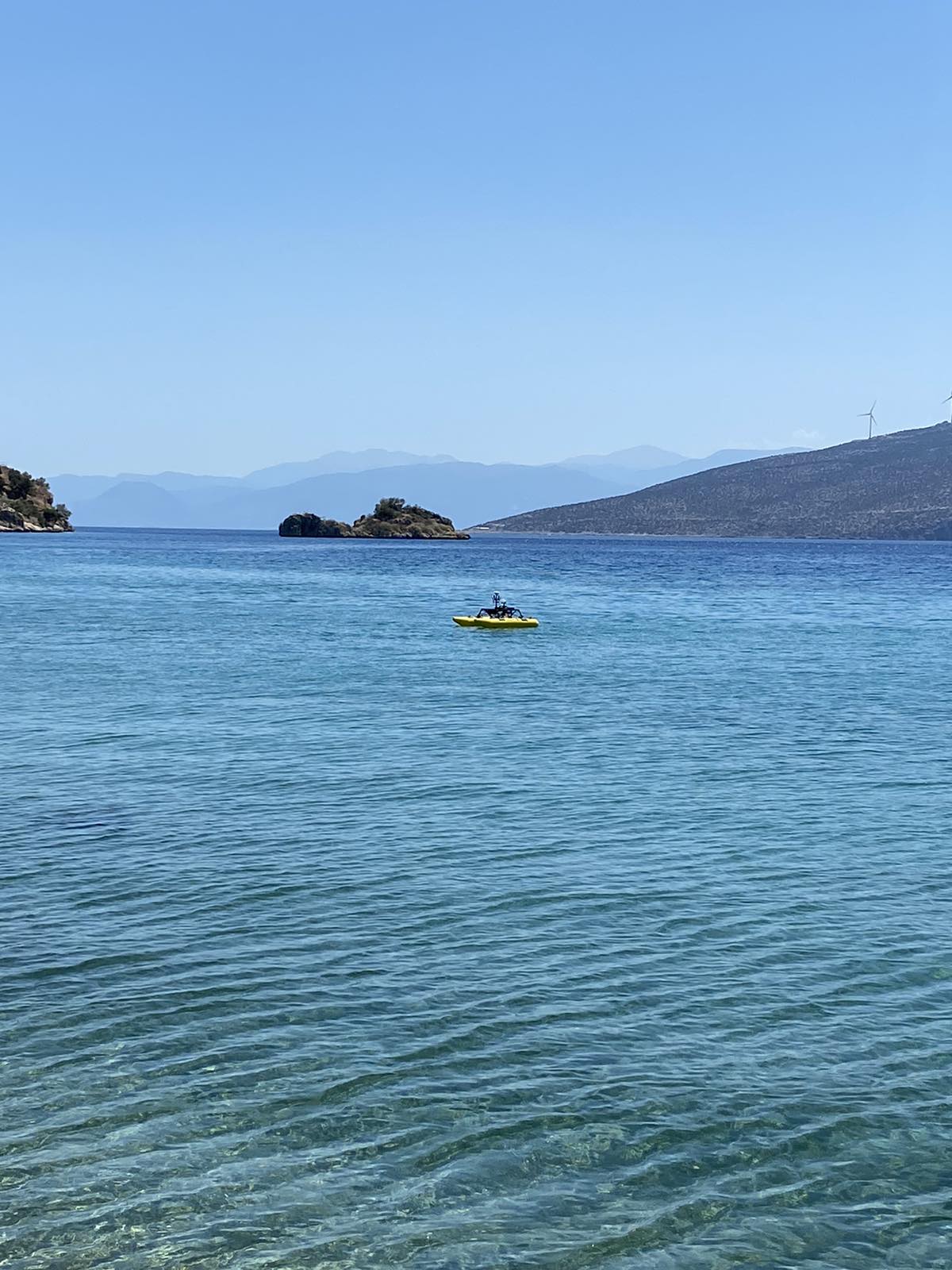
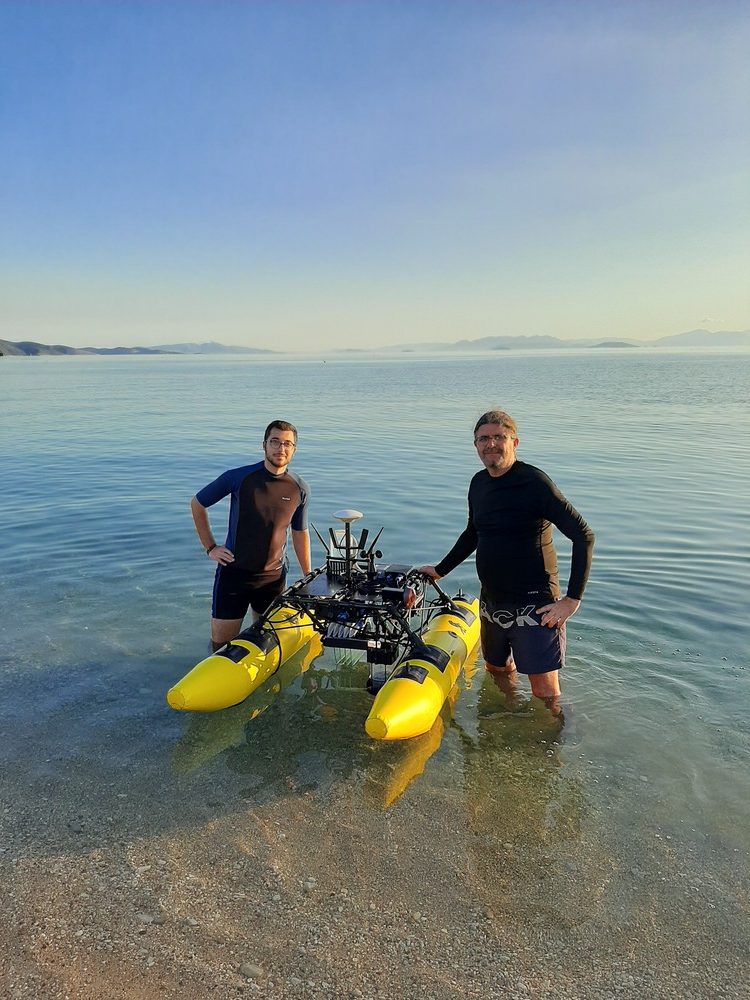
The unmanned surface vehicle(USV) constructed in the framework of InterSea project was initially used in Antikira Bay, Viotia, Greece, in June 2024, in order to:
- test the SML sampler effectiveness in a full scale sampling process
- compare the USV sampling procedure, using rotating, parallel, glass discs for SML collection, with the “traditional” sampling methods (the glass plate of Harvey and Burzell type and the screen mesh of Garrett type)
- compare the USV sampling procedure for SSW collection with the manual methods
New methodological approach for assessing petroleum pollution in coastal areas
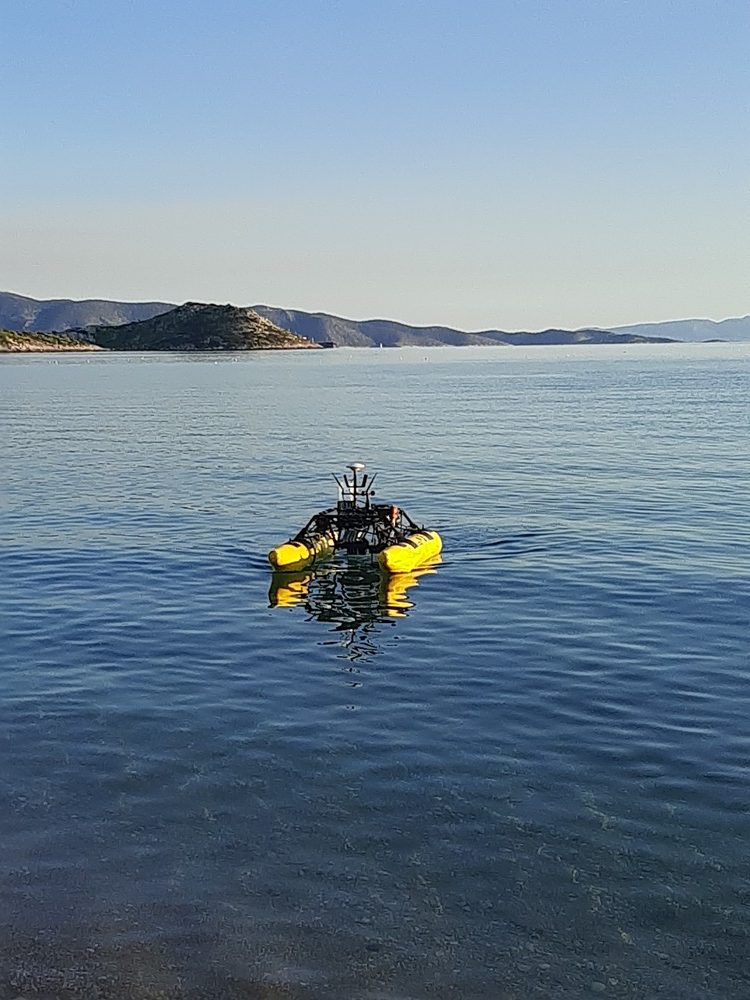
The SML sampler was applied to the study of oil pollution within the pilot coastal zone of Elefsisgulf, characterized by significant anthropogenic pressures. Pollution levels were evaluated through the collection of paired samples of both SML and SSW from eight sampling sites, representing different microenvironments, with different topographical features and degrees of pressure. Seasonal sampling campaigns were performed in January and September 2025.
Assessment of environmental state of the study area in terms of oil pollution
To evaluate the anthropogenic impact on the sea surface ecosystem, the unaffected by anthropogenic activities area of Agios Nikolaos,Anavyssos was selected to assess background levels of oil pollutants such as hydrocarbons and metals with emphasis on Ni and V.
A comparison of the results was performed, to assess the environmental state of the study area in terms of oil pollution and metals.
Overall evaluation of InterSeA project
InterSeA results revealed satisfactory USV performance and operation of water samplers for SML and SSW collection. Measured parameters include dissolved organic carbon (DOC), dissolved metals, Total Polycyclic Aromatic Hydrocarbons (PAHs) and Total alkanes (C7 – C40). In all cases, the values measured were comparable in terms of the different sampling techniques applied and replicable for all samplingscarried out. The results generally indicate enrichment of the SML in organic carbon, compared to SSW, reflecting both natural physicochemical processes potentially occurring at the air-sea interface, as well as influence of anthropogenic activities. The generally higher suspended particulate matter (SPM) levels reported in SML in comparison to SSW, indicate an enrichment of the sea surface, with the highest values observed at industrially influenced sites. Regarding metals, the overall pattern confirms that industrial activities, maritime operations and local hydrodynamics jointly control the spatial distribution of dissolved trace elements in the study area, with seasonal variability superimposed mainly through particulate dynamics and organic complexation processes. The concentrations and distribution patterns of PAHs and n-alkanes in SML and SSW of Elefsis gulf reveal a clear spatial and seasonal variability, reflecting both anthropogenic pressures and natural environmental processes.
InterSeA established a solid foundation for future research and technological evolution in marine monitoring with autonomous systems. The suggested automated system constitutes an efficient piece of sampling equipment with the potential to be replicated and commercialized. It can effectivelycontribute to research in various scientific fields, since information derived from SML analysis is of interdisciplinary interest, providing data on the biological and chemical composition of this thin layer as well as on physical properties denoting water circulation patterns. The results produced demonstrate that innovative technologies can effectively contribute to the improvement of coastal waters monitoring and protection, providing high quality data and thus, reliable assessments of the status of the marine environment, enhancing national and European sustainable development initiatives and assisting Competent Authorities in their effort to comply with EU legislation, such as Water Framework Directive(WFD) and Marine Strategy Framework Directive (MSFD) and contribute to the aspirations of EU Green Deal.